2023–present
Senior Lecturer (부교수) in Korean Studies
The University of Melbourne, Asia Institute
Senior Lecturer in Korean Studies at the University of Melbourne. Korean language education, the psychology of language learning, and Q methodology.
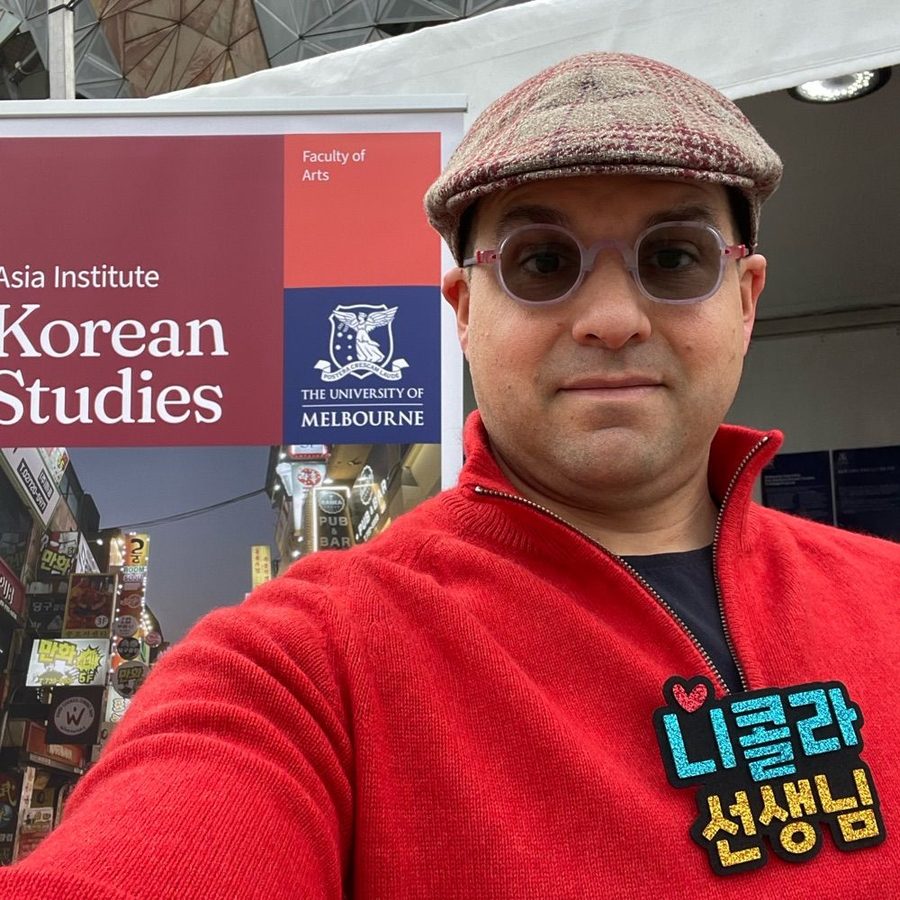
I work at the University of Melbourne, where I teach Korean language and conduct research on Korean language teaching and learning. I am originally from Italy. I lived ten years in Seoul, where I studied language, earned my degrees (from Korea University), and worked (at the Sogang University Korean Language Education Centre) before moving to Australia, where I taught Korean language at the University of Western Australia for eight years.
In 2024, I was awarded the Republic of Korea’s Prime Minister’s Commendation for promoting the Korean language. This website is about my academic activity.
Outside of research, I like swimming — I raced when I was younger, and more recently have done ocean swim races, including the Rottnest Channel Swim (19.8km), twice. I’ve also been trying for a few years to learn the daegeum (대금), a Korean bamboo flute. I’m not very good, but I enjoy playing Korean classical court music.
Positions, education, and roles. Click a category to expand.
Senior Lecturer (부교수) in Korean Studies
The University of Melbourne, Asia Institute
Lecturer (조교수) in Korean Studies
The University of Western Australia, School of Social Sciences
Full-Time Lecturer (전임강사)
Sogang University Korean Language Education Centre
PhD, Korean Language and Culture Education
Korea University
MA, Korean Language and Culture Education
Korea University
BA, East Asian Languages and Cultures
Ca’ Foscari University of Venice
Fellow, Higher Education Academy
Certificate of Korean Language Teacher (level 2), National Institute of the Korean Language
Deputy Editor-in-Chief, Hallyu: The Korean Wave; Associate Editor, Journal of Korean Language Education; Editorial Board Member (2026–), Journal of the Psychology of Language Learning
President, Australian Association of Teachers of Korean (AUATK)
Convener and Head of Program of Korean Studies, the University of Melbourne
Director, Global Korea Research Hub, the University of Melbourne
Discipline Chair of Asian Studies, the University of Western Australia
Korean Studies Coordinator, the University of Western Australia
Selected work on language teacher and learner emotions, Korean language education in Australia, and language teacher competencies. The full publication list is below.
Chronicling emotional trajectories in early-career language teaching: A longitudinal intensive single-case Q methodology study
This study adopts Q methodology with an intensive single-case design to document emotional states of three early-career (EC) Language Other Than English (LOTE) teachers in Thai secondary schools. The findings suggest that EC teachers navigated their emotions through expectations, the status of LOTE education, and passion for teaching.
View publication →Excitement and confusion: An emotion-based approach to Korean language teaching
This chapter illustrates the results of a large-scale longitudinal survey on epistemic emotions in Korean language learning, analysed through structural equation modelling, revealing the relationship between excitement, confusion, teacher friendliness and strictness, and students' learning effort.
View publication →How epistemic anxiety and curiosity link perceived value and intended efforts in the language classroom
This study analyses how two common epistemic emotions — epistemic anxiety and curiosity — mediate the link between a learner's perceived value and intended effort, using survey data from learners of Korean as a foreign language.
View publication →Learning Korean in High Schools: The Year 11 and Year 12 Korean language syllabi in Victoria and Western Australia
This chapter shows the complex interrelation between national and local language policies, syllabus development, Korean language provision and students' uptake in Australian schools, comparing the Victoria and Western Australia syllabi.
View publication →At the crossroad between community and additional language: The case of Korean language education in Australia
An overview of Korean language learning in Australia with a focus on primary and secondary education, arguing that the focus of Korean language provision must shift from community language to additional language.
View publication →The Korean language is booming at Australian universities. What needs to be done to keep the momentum going?
An opinion piece on strategies to foster Korean language enrolments at the tertiary level in Australia, including understanding students' vision and developing local advanced-level learning materials.
View publication →A Q methodology comparative analysis of teaching competencies for non-native speaking teachers of Chinese and Korean
A comparative study using Q methodology to investigate the subjective viewpoints of 39 Chinese and 35 Korean language teaching professionals on key teaching competencies, revealing shared and context-specific understandings across the two cohorts.
View publication →Defining competencies for training non-native Korean speaking teachers: a Q methodology approach
35 teachers sorted 42 statements about non-native Korean teacher competencies; the analysis identified four perspectives, from adapting teaching to context, to the importance of continuous professional development and a strong sense of responsibility.
View publication →All my books, textbooks, journal articles, book chapters, and reports. Click a category to expand.
Edited volumes and textbooks, from Q methodology in language research to Korean language coursebooks used at university and high-school level.
.png)
Co-edited with Mi Yung Park.
An edited volume on how ethnic nationalism and dominant language ideologies shape policies, discourses and lived experiences in Korean society and diasporic settings, examining linguistic discrimination, identity abroad, and access to language learning.
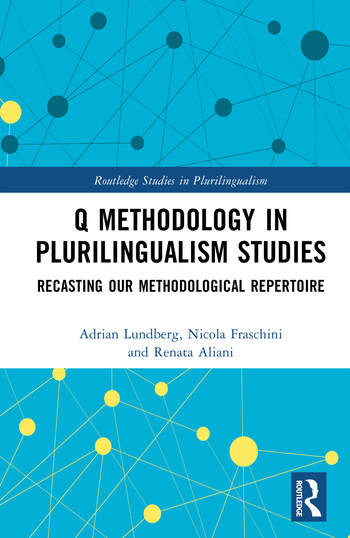
Co-authored with Adrian Lundberg and Renata Aliani.
A volume advocating for Q methodology as a way to capture the nuances and complexities of plurilingual communication, pedagogies and policies, moving from theoretical foundations to practical case-study applications across plurilingualism research.
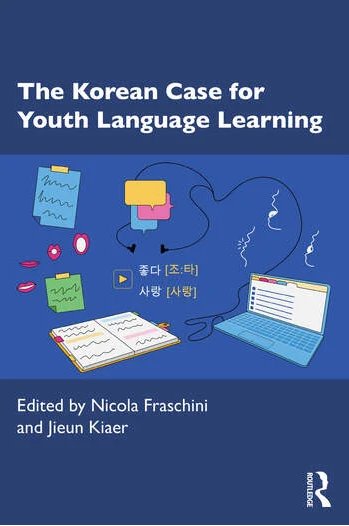
Co-edited with Jieun Kiaer.
A collection addressing the intersection of Korean language learning, the global popularity of Korean culture, and Generation Z learners' characteristics, spanning contexts across five continents.
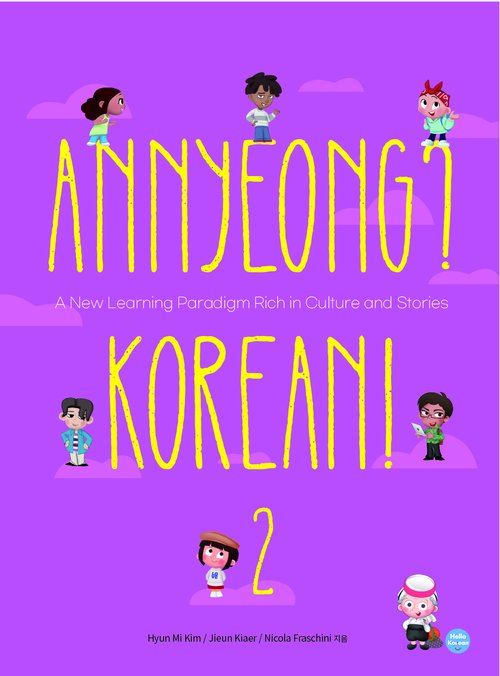
With Hyun Mi Kim and Jieun Kiaer.
A Korean language textbook series for recreational/hobby learners, built around iconic Korean locations — Han River Park, Olive Young, the DMZ, Jeju Island — to make the language feel immediate and real. Volumes 1, 2 and 3 published.
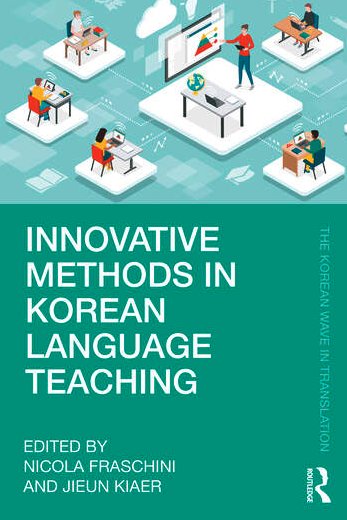
Co-edited with Jieun Kiaer.
Research- and experience-based contributions on technological and non-technological innovations in Korean language teaching, from LLMs and VR to multimodal teaching and critical pedagogy.
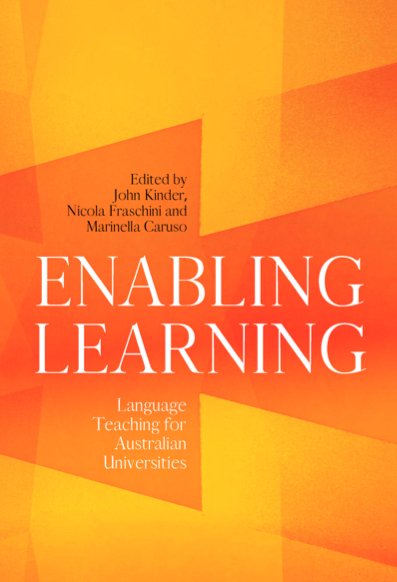
Co-edited with John Kinder and Marinella Caruso.
Reflections from tertiary language educators across Indigenous, European, and East Asian languages, from beginner to advanced level, traditional to online and hybrid environments. Open access.
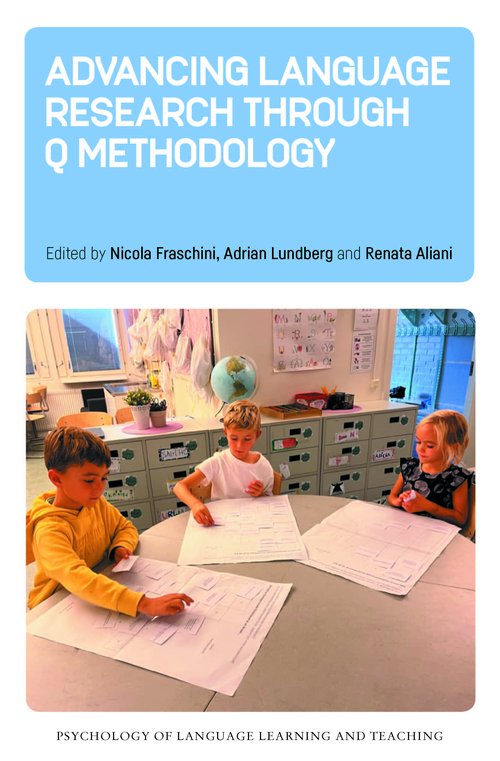
Co-edited with Adrian Lundberg and Renata Aliani.
How Q methodology can uncover new perspectives in language education and policy research — identity, motivation, cognition, emotion, teacher beliefs, and programme evaluation.
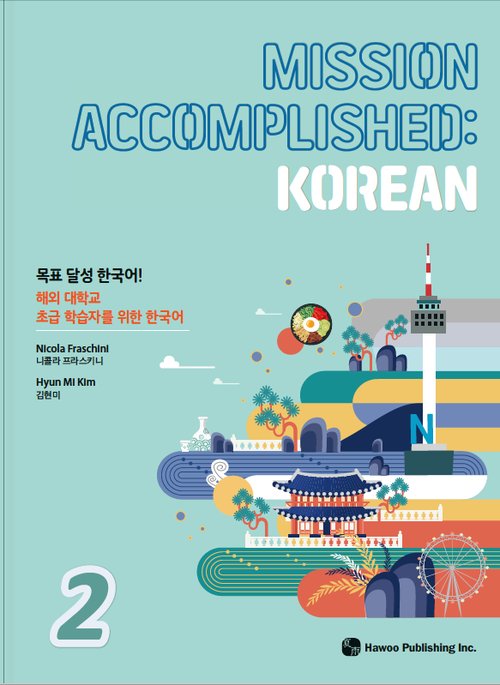
With Hyunmi Kim.
Two textbooks for beginner university learners of Korean, used in first-year Korean language classes at the University of Melbourne, with grammar explanations and the four core skills.
Author-accepted versions of select papers, and conference presentations. See the full list above for links to all my published works.
Yuan, C., & Fraschini, N. (2025). A Q methodology comparative analysis of teaching competencies for non-native speaking teachers of Chinese and Korean. Language, Culture and Curriculum, 1–20.
Compares how non-native teachers of Korean and Chinese perceived the importance of a set of teacher competencies, using a second-order factor analysis.
Thumvichit, A., & Fraschini, N. (2025). Chronicling emotional trajectories in early-career language teaching: A longitudinal intensive single-case Q methodology study. Foreign Language Annals, 1–21.
Looks at the dynamics of language teacher emotions over a teaching semester, focused on early-career teachers, with a single-case Q methodology design.
Park, H., & Fraschini, N. (2025). A Q methodology multiple single-case study on the dynamics and complexities of Korean language teacher emotions. Journal of Korean Language Education, 36(1), 139–163.
Data on the variety of emotions teachers experience in ten classroom situations, analysed by teacher, featuring a manual rotation of factors based on complex and dynamic system theory. Open access at the DOI link.
Fraschini, N. & Kim, H. (2025). The Australian curriculum and the Korean language syllabus in Victoria and Western Australia. Paper presented at the 4th OCKS International conference, Korea University, 14 February 2025.
An overview of language education in Australia, analysing the Year 11 and Year 12 Korean Second Language syllabus developed in Western Australia and Victoria.
Fraschini, N., Elfving-Hwang, J. & Tao, Y. (2024). Korean language education in Western Australia: Developments and challenges. In Enabling learning: Language teaching for Australian universities (pp. 63–91). ANU Press.
Korean language education in Western Australia at the secondary and tertiary levels, and university students' learning motivation in this context. Open access at the DOI link.
Fraschini, N., & Gonzales, A. (2024). Administrative and pedagogical considerations for collaborative online Korean courses: A case study. In Enabling learning: Language teaching for Australian universities (pp. 157–175). ANU Press.
A pre-Covid hybrid Korean language course taught in part remotely and in real time from Western Australia to students at Denver University, US. Open access at the DOI link.
Fraschini, N. (2024). At the crossroad between community and additional language: The case of the Korean language in Australia. The Review of Korean Studies, 27(2), 312–328.
Argues that Korean in Australia is shifting from a community language to an additional language, and that efforts should sustain this shift.
Fraschini, N., & Park, M.Y. (2024). The linguistic challenges facing an increasingly diverse Korea. Melbourne Asia Review, 20.
Introduction to a special issue on Korean language, society and identity — accessibility to linguistic resources for migrants, multicultural families, North Korean defectors, and learners with disabilities. Open access.
Fraschini, N., Cho, H. E., & Kim, H. M. (2024). Report on fostering the provision of Korean language education in Victoria (2024). Zenodo.
An assessment of Korean language education in Victoria (primary and secondary levels) with practical recommendations, following the 1st Forum for Korean Language Educators in Victoria at the University of Melbourne.
Kim, S. E., Fraschini, N., & Park, H. (2023). Defining competencies for training non-native Korean speaking teachers: a Q methodology approach. International Review of Applied Linguistics in Language Teaching.
Korean teachers' subjective perspectives on the main competencies required of non-native Korean language teachers, with pedagogical and policy implications.
Fraschini, N. & Tao, Y. (2023). How epistemic anxiety and curiosity link perceived value and intended efforts in the language classroom. Annual Review of Applied Linguistics, 43, 1-18.
Focuses on curiosity and anxiety as epistemic emotions, and how they mediate between perceived value and intended effort online and offline.
Fraschini, N. (2023). The Korean language is booming at Australian universities. What needs to be done to keep the momentum going? Melbourne Asia Review, 13.
Strategies to foster Korean language enrolments at the tertiary level in Australia. Open access opinion piece.
Lundberg, A., Fraschini, N., & Aliani, R. (2023). What is subjectivity? Scholarly perspectives on the elephant in the room. Quality & Quantity.
Examines the concept of 'subjectivity' from a Q methodological perspective — how researchers employ the term, with implications for Q methodology studies.
Fraschini, N. (2023). Language learners’ emotional dynamics: Insights from a Q methodology intensive single-case study. Language, Culture and Curriculum.
Korean language learners' emotions in an instructed environment, using a Q methodology multiple single-case design.
김현미, 프라스키니 니콜라(2022). 호주 한국어 교육에서 언어문화 교육과정 개발 현황. 세계 한국어 한 마당 발표문, 2022년 10월 6-7일.
A presentation with Hyunmi Kim on Korean language school curricula developed in Australia, including the curriculum introduced in Western Australia in 2023.
Fraschini, N. & Park H. (2022). A Q methodology study to explore Korean as a Second Language undergraduate student-teachers’ anxiety. International Journal of Educational Research Open, 3, 100132.
Compares how pre-service (undergraduate) and in-service teachers perceive anxiety related to Korean as a second language teaching. Open access.
Fraschini, N. (2020). ‘Because Korean is cool’: Adolescent learners’ vision, motivation, and the study of the Korean language. Journal of Korean Language Education, 31 (English edition), 37-74.
One of few motivation studies on adolescent learners of Korean, showing motivation characteristics that may be language-specific and the importance of the teacher's role. Open access.
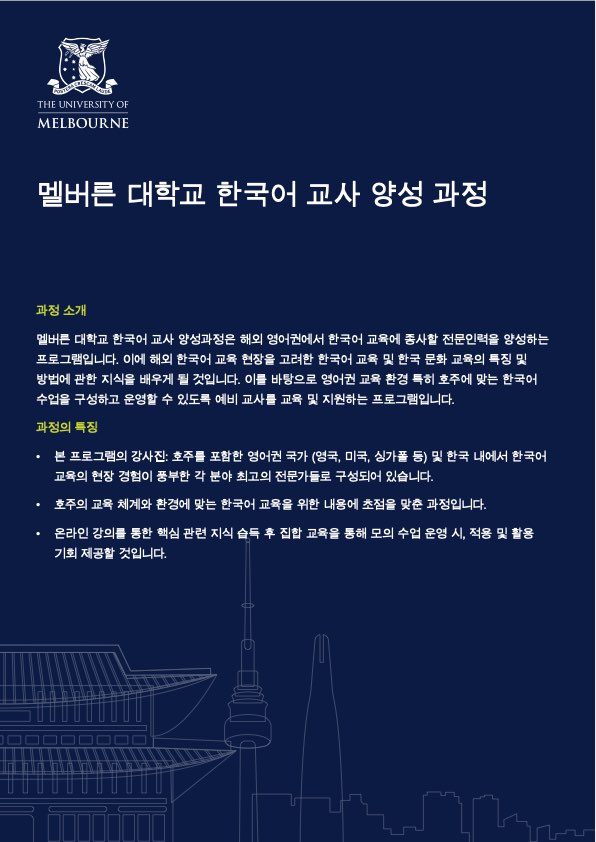
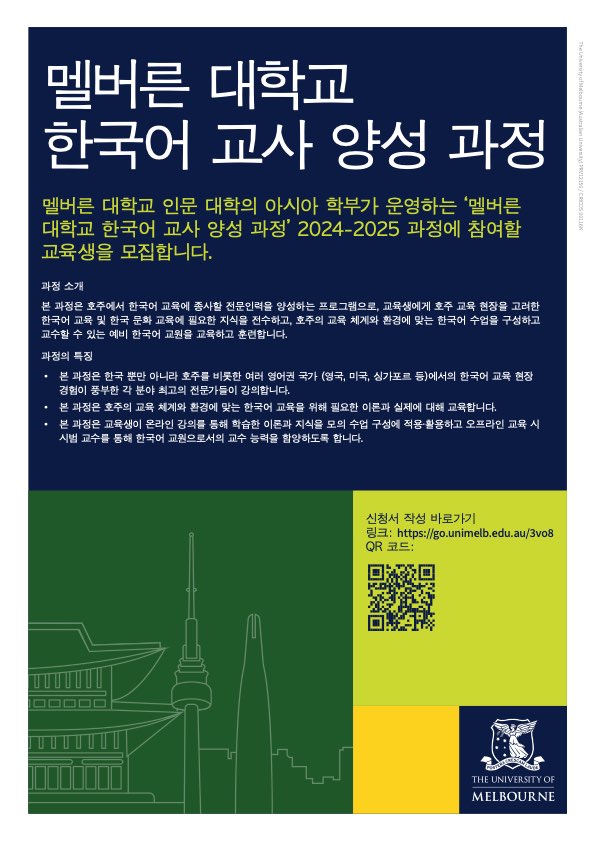
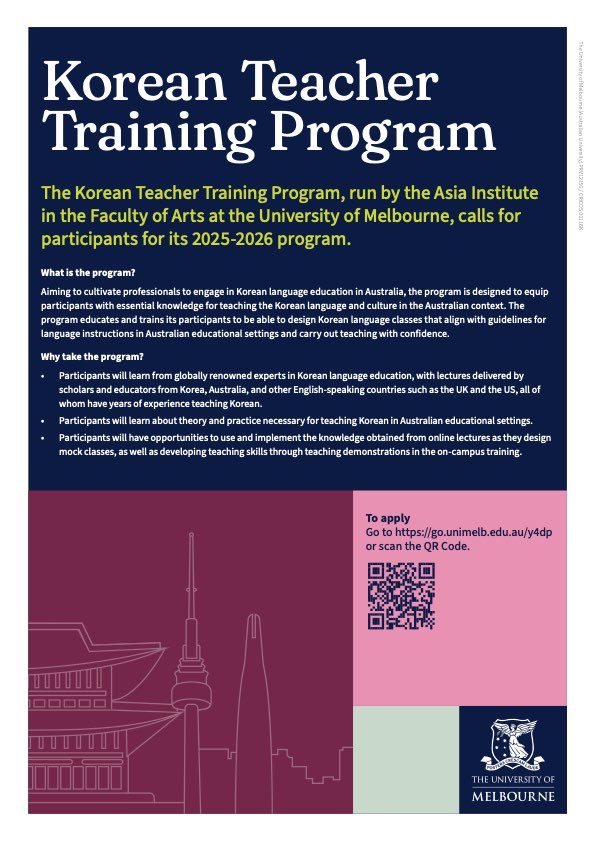
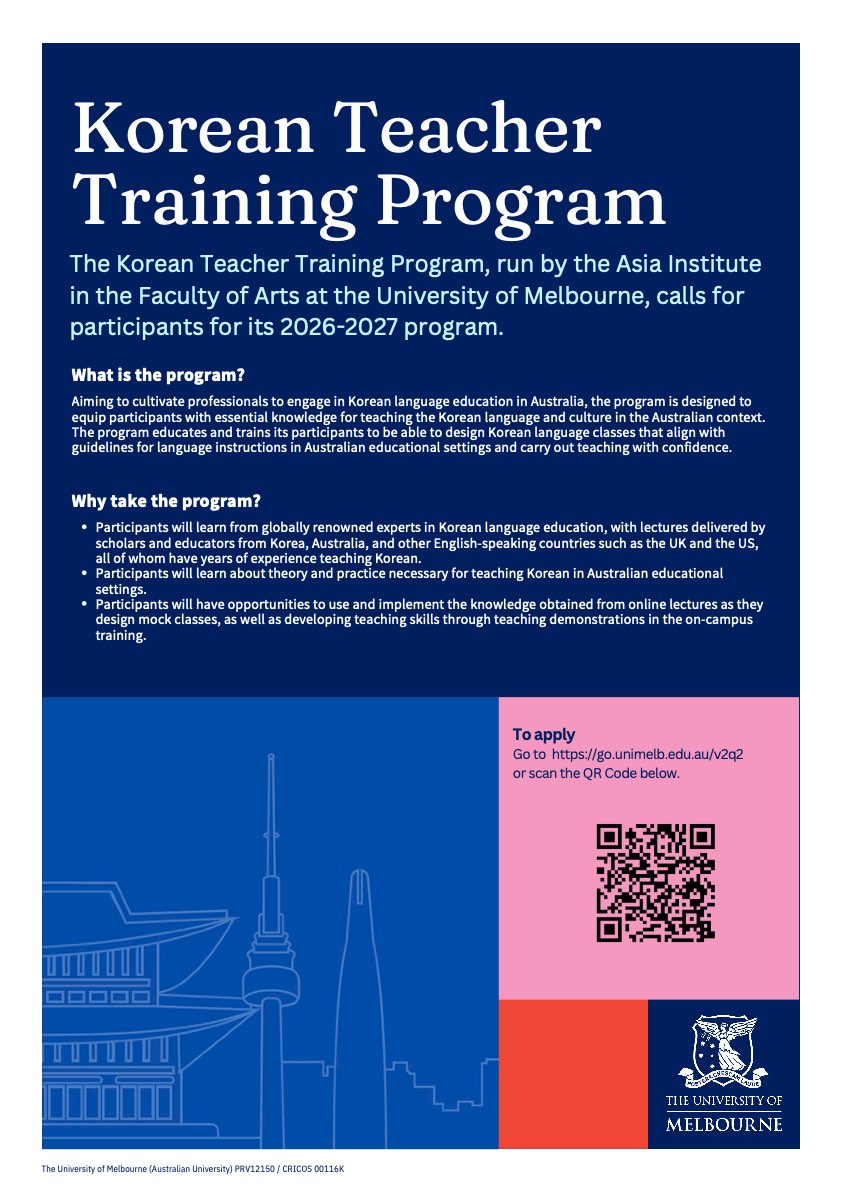
For information about the Korean teacher training program at the University of Melbourne, contact korean-teachers@unimelb.edu.au.
Many of my research projects adopt Q methodology — a data-gathering technique, statistical procedure, and analysis approach developed to study human subjectivity. To know more about Q methodology and join the Melbourne-based Q methodology research group, visit Q Down Under.
An online tool for running Q methodology studies, from concourse development to sort collection and data analysis.
Visit Q Down Under →For all enquiries, the best place to reach me is through my University of Melbourne profile.